
In some ways it doesn’t matter so much whether Andy Burnham wins the Makerfield by-election in Greater Manchester and is able to challenge Keir Starmer for the Labour leadership, or if the prime minister limps on from one crisis to the next, an electoral reform revolution is brewing that should breathe fresh life into Britain’s ailing democracy.
For the old ‘First-Past-the-Post’ (FPTP) electoral system – currently used to elect members of parliament (MPs) and form British government – is discredited and dying.
The real question is can it be killed-off through a risky referendum or by totting up the votes against the old order at the next General Election.
Designed for different age
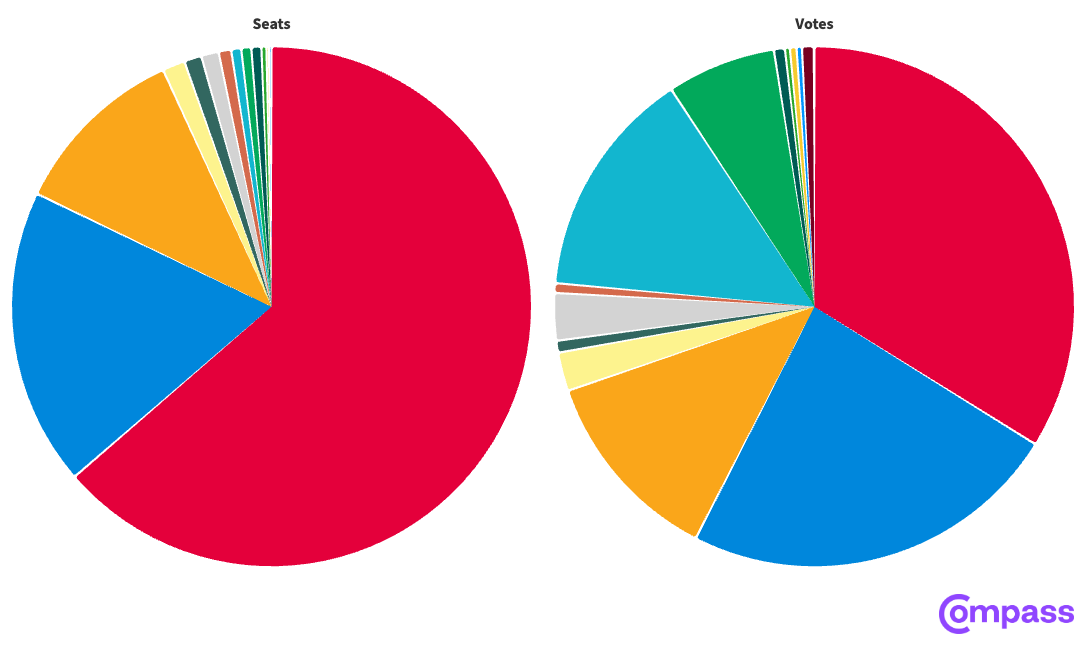
Designed for a different age, when just two main parties battled it out for power in the belief that FPTP would bring stable government, the unfairness of the current system meant Starmer was swept into power by winning 63% of the seats in Westminster despite only gaining a third of the votes for Labour across the United Kingdom.
That huge Labour majority (411) seats was based on just 33.7% of the votes won at the 2024 General Election; while the Conservatives collapsed to only 121 seats (18.6% of MPs, while securing 23.7% of the votes), as the main image (above) from Compass shows, comparing seats won against votes cast at the 2024 General Election.
The real losers, apart from the Tories, look were Reform UK, which won only 5 seats (less than 1% of the 650 MPs in the House of Commons) despite gaining 14.3% of the votes.
The Green Party can feel just as cheesed-off, as they collected 6.7% of the votes across the county but only saw 4 MPs elected, as the House of Commons Library recorded.
That can’t be right and, as I wrote last year, meant the last General Election was the least proportional in British history.
Proportional representation
The Electoral Reform Society highlighted what’s wrong with the current voting system the day after the General Election, saying if a system of proportional representation, or PR, as used as for the Scottish and Welsh Parliaments had been used, the results would have been very different and better reflect the will of people.
The Scots and Welsh use the Additional Members System (AMS), where you choose a constituency candidate and have a second vote for your preferred party to represent you regionally.
It means you can vote for your favourite local candidate never mind their party affiliation and cast your other vote for a different political party if you so fancy.
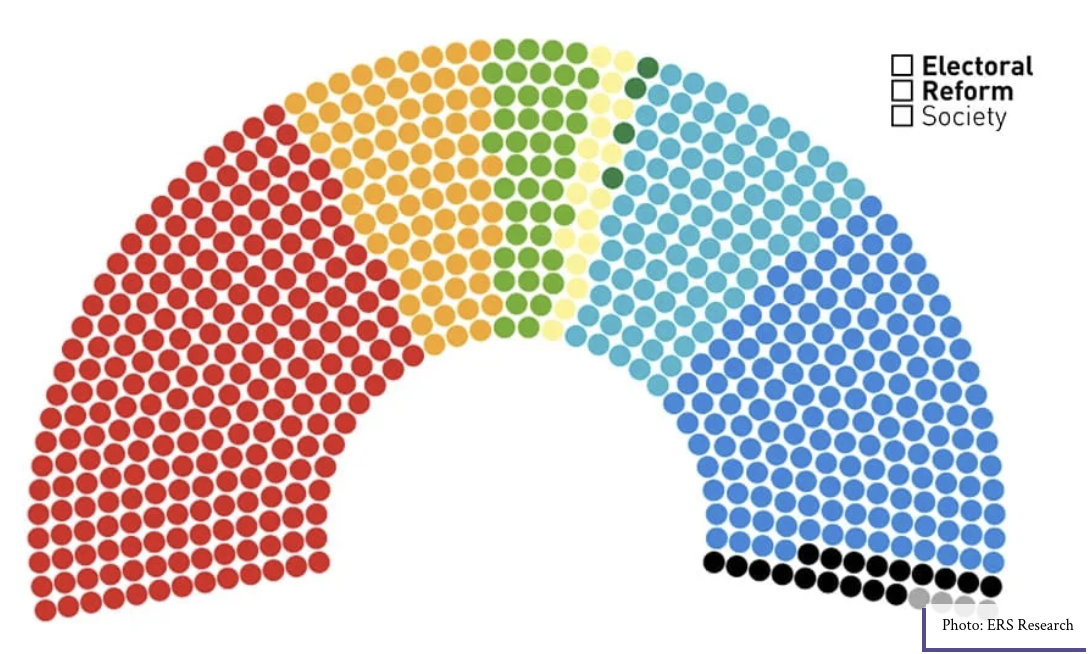
According to the Electoral Reform Society, the General Election result using AMS would have seen Labour still being the largest party in parliament, but with their number of MPs reduced to 228 (from 411 using First Past-the-Post).
AMS wouldn’t make much difference for the Tories, but they would have seen their MPs increase slightly (from 121 to 139). The Lib Dems would have gained one more MP (up from 72 to 73)
The real winners would have been Nigel Farage’s Reform UK, which would have won 100 seats (compared with 5 at the General Election) and the Greens, which would have seen 71 of its candidates elected to the House of Commons (as opposed to the 4 Green Party MPs elected in 2024).
Burnham favours change
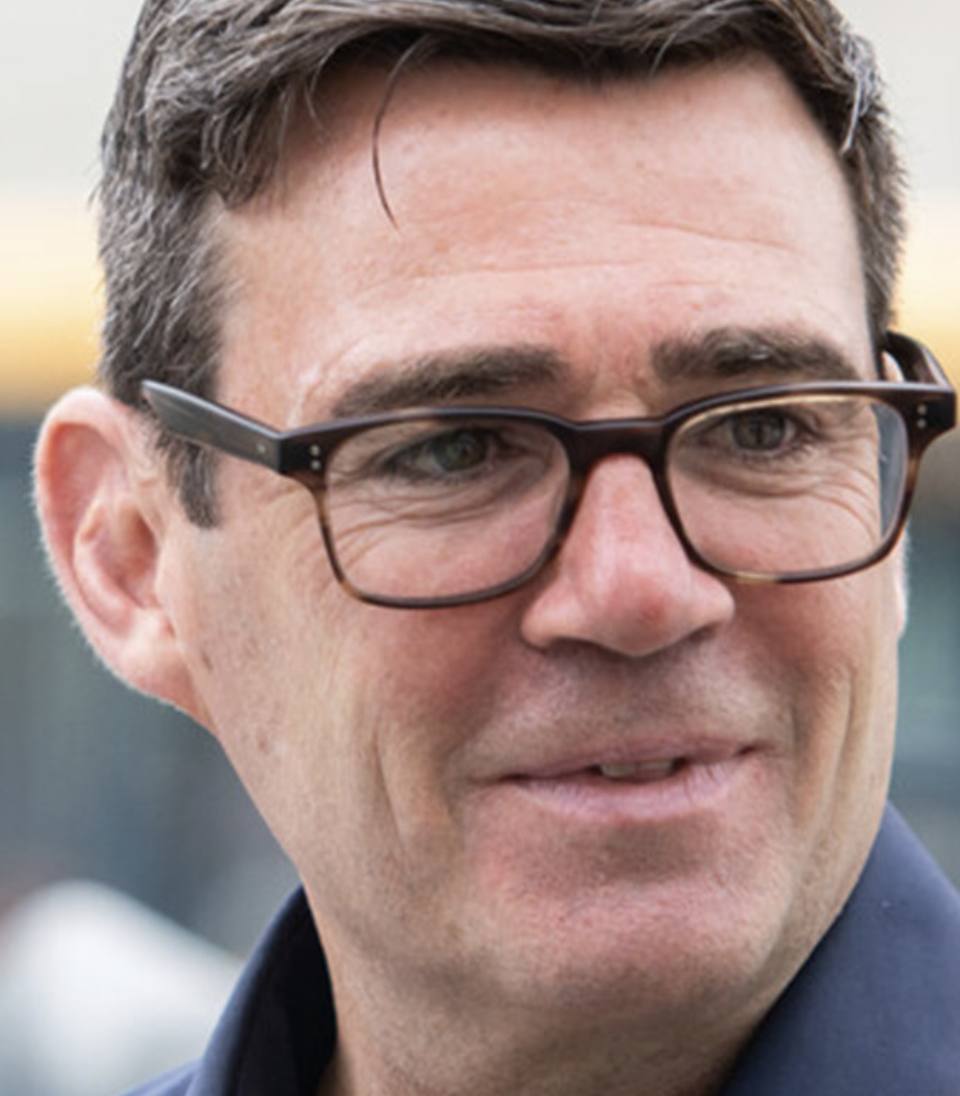
According to a report in The Observer on 31 May 2026: “Andy Burnham has promised to introduce proportional voting at Westminster without a referendum, putting Britain on the brink of an electoral revolution.”
He told the paper’s political editor Rachel Sylvester he had been persuaded to back the change when he stood for the Greater Manchester mayoralty, which was fought under a supplementary vote system.
That system, which is a sort of proportional representation, gives people a first and second choice, with the top two candidates having a run-off if no candidate secures 50% of the vote.
Burnham said it made him knock on every door to try to secure second preferences and “made every vote count.”
Burnham’s team told The Observer that if the current Mayor of Greater Manchester became prime minister, he would launch a national commission on electoral reform to determine which voting system should be used.
No referendum needed.
After the experience of Brexit, Burnham suggests that no standalone referendum would be needed.
Instead a Burnham-led Labour Party would make it a manifesto commitment at the next General Election (expected in 2029) to reform the electoral system.
As the Liberal Democrats have long championed proportional representation and Reform UK and the Green Party also want such a change, there are excellent odds in favour of scrapping FPTP which has run its course and no longer serves the country, or democracy!
Of course the Labour old guard, which favoured the FPTP system, or the Tories, might stage a revival and fight off what many would see as a democratic revolution.
But with the front-runners in a likely Labour leadership challenge now openly declaring in favour of proportional representation, including Burnham and Wes Streeting, and with recent polling showing two-thirds of Labour Party members support electoral reform, the tide is turning and the old system will surely be swept away after the next General Election.
Electoral reform should encourage political parties to work together and reflect the fact we now have a four or five parties capable of wining over 10% of the votes. It might even attract ordinary people to take a real interest in politics and to get involved in democratic government.
The only thing that might stop it is if Nigel Farage is elected Prime Minister after only winning just a third of the votes (as happened with Starmer) and deciding to preserve the old discredited system so he can have power without fair representation.
Surely not after earlier pledges?
However, he wouldn’t be the first to change his mind once gaining the keys to Number 10 Downing Street and not want to share power in a coalition government.
Hopefully, we won’t need to take a chance on Nigel Farage sticking to his word.
So, perhaps the outcome of the by-election in Greater Manchester does matter if we really want to shake-up things in Westminster. Certainly that is what Andy Burnham is promising, as he confirmed on BBC Question Time that he would stand against Starmer if he becomes Makerfield’s new MP and wins the backing of enough Labour MPs to enter any leadership contest.
Main image shows the contrast between share of the General Election votes and seats won. Labour in red; Tories in dark blue; Reform UK in light blue; Lib-Dems in yellow; Greens in Green. Picture from political pressure group, Compass.
- Also see my blog from a year ago, ‘What makes Keir Starmer tick?’