Another New Year and another reset by Britain’s embattled prime minister Keir Starmer, who has hedged his early 2026 bets on closer ties with the European Union rather than boasting about the amazing fall in net migration since Labour won landslide victory at the General Election 18 months ago.
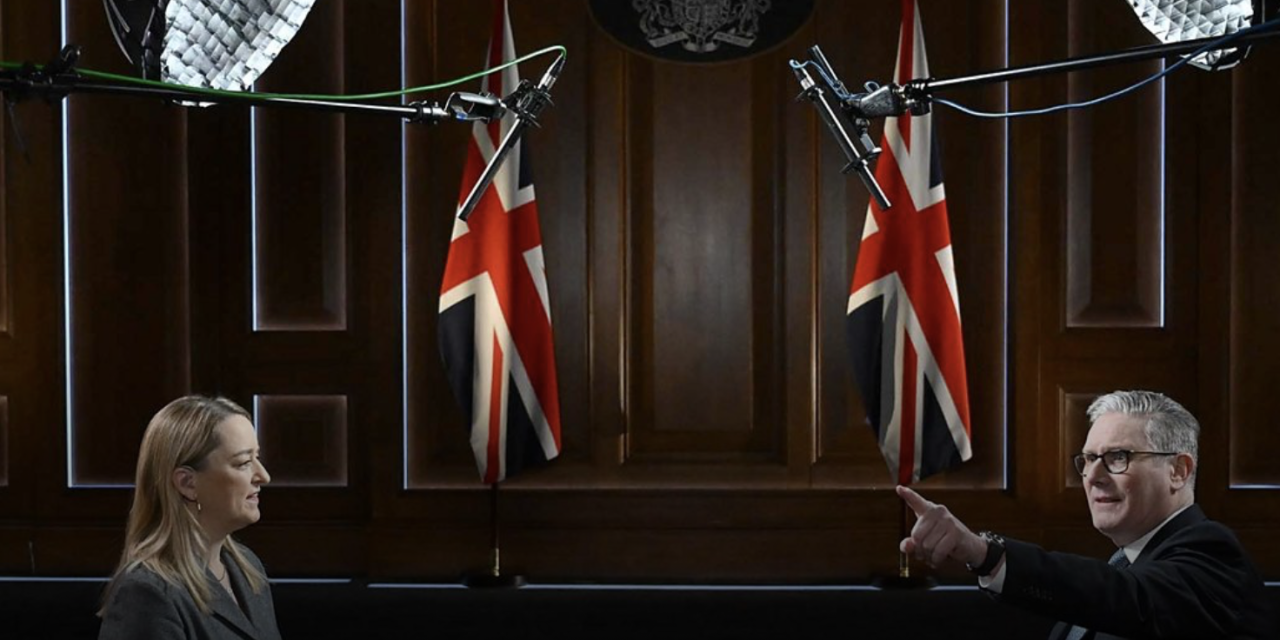
Starmer made his latest pro-Europe pitch during a wide-ranging BBC Sunday with Laura Kuenssberg interview on 4 January, when he surprised some political pundits by suggesting it would be “better looking to the single market rather than the customs union for our further alignment” with the EU.
His remarks appeared to slap-down several Labour front benchers, including Justice Secretary David Lammy and Health Secretary Wes Streeting who have called for the UK to join the EU’s customs union, which would put at risk Britain’s recent trade deals with India and the (lower) tariff deal with Donald Trump’s US administration.
Swiss patchwork
As far as I can make out, Starmer is looking for something similar to Switzerland’s patchwork of bilateral treaties with the European Commission. These allow the landlocked central European nation surrounded by EU states to access parts of the single market for mosts goods while remaining outside the customs union and able to operate an independent trade policy.
I don’t think Starmer mentioned the Swiss arrangements in his interview with Kuenssberg, perhaps because they often drive EU policy chiefs crazy with the 100 or more special treaties and ‘pick-and-choose’ approach that the Swiss adopt to accepting EU laws.
However, Kuenssberg hit the nail on the head when she tackled Starmer on whether getting closer to the single market would involve a return to the free movement of people between EU and the UK, endangering one of the main arguments for Brexit and leaving the EU in the first-place.
Take back control
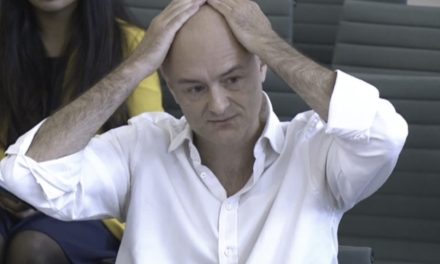
Remember the battle cry of Dominic Cummings and Nigel Farage about ‘taking back control’ of immigration, which was so central to the successful Leave campaign during the 2016 Brexit referendum.
Of course, Boris Johnson’s EU withdrawal agreement in 2020 managed to do the exact opposite and immigration from non-EU countries surged while European workers returned home in droves and the number of EU students studying in the UK fell dramatically.
Far from bringing down net migration to tens of thousands as promised by every Tory leader since Theresa May was prime minister, immigration to the UK from outside the EU soared out of control.
The increase was startling with net migration (the number coming into the country compared with those leaving) peaking of 944,000 in the year ending March 2023, compared with 271,000 in the year ending December 2019.
Immigration concerns
Immigration remains one of the main issues concerning the British public, along with the cost of living crisis and the state of the NHS, according to opinion polls and is central to Nigel Farage and the Reform UK Party.
But numbers have tumbled since Starmer’s Labour government was elected in July 2024.
According to the latest estimates, net migration was down to around 204,000 for the year to June 2025 and could fall to around 50,000 by June this year.
So, why isn’t Starmer making the dramatic fall in immigration the centre piece of his latest relaunch. Clearly his government is desperate for something positive to tell the voting public, which has fallen so out of love with the Labour prime minister.
Fraser Nelson, a columnist for The Times, has a theory which he discussed with Times Radio political editor Kate McCann on 5 January 2026, saying it is not just because Starmer is a very poor storyteller.
Nelson reckons that while British business is crying out to recruit skilled labour from abroad, particularly from Europe, the Labour Party is more concerned about rising levels of unemployment and the need to be seen trying to match Brits currently out-of-work with job vacancies.
Somewhat ironically, Nelson asked: Isn’t that what the Labour Party is supposed to be for?
Focus on apprenticeships
Perhaps that explains why Starmer has scrapped Tony Blair’s much-trumpeted goal of getting half of young people to go to university with a new target of getting two-thirds of young people into higher-level learning, with a much greater focus on apprenticeships and technical training.
As for his reluctance to even talk about falling net migration, I believe Starmer is still haunted by the anti-immigration riots that swept towns and cities shortly after his landslide election victory and the fact he has failed to ‘smash the gangs’ transporting asylum-seekers across the English Channel in small boats.
Nelson suggests another fear is that Starmer will have to acknowledge that Brexit has given him the power to slam the brakes on immigration and that he has followed through on clampdowns, first introduced by the panic-stricken last Tory government, including the ban on international postgraduate taught (masters) students from bringing dependants.
Perhaps, Starmer needs to rethink that strategy, if it can be called one, and I predict he may start using the net migration figures to justify his planned reset with the EU.
Youth mobility
His government has recently announced that the UK will be re-joining the EU’s Erasmus+ student mobility scheme and Starmer was happy to tell Kuenssberg he is currently negotiating a youth opportunity scheme with the European Commission to enable under-30s to work or study for a couple of years in the UK and for young Brits to do the same in the EU.
That is a kind of free movement of people, perhaps one that the Swiss would be happy to adopt from us as we experiment with some of the bilateral arrangements that Switzerland has pieced together with the EU.
As net migration continues to fall away towards more of a balance between arrivals and people leaving the UK, the whole immigration debate will change massively.
It will cut the ground from under Farage and his Reform Party well before the next General Election and we could well see most of the public accepting that we sometimes need to encourage immigration (by legal routes) and that free movement of people is not necessarily something to oppose.
Perhaps, we don’t have to actually rejoin the EU to sort out our relations with the European Union, and we don’t have to join the customs union to achieve a reset. Just ask the Swiss!
References:
- Interview with the Prime Minister, Sunday with Laura Kuenssberg, BBC TV 4 January 2026 https://www.bbc.co.uk/iplayer/episode/m002pd0s/sunday-with-laura-kuenssberg-interview-with-the-prime-minister
* Kate McCann interviews Fraser Nelson for Times Radio, 5 January 2026 – https://www.youtube.com/watch?v=Laas_ueyAoo
- Positive sign for study mobility as UK rejoining Erasmus+, by Nic Mitchell, De la Cour Communications.com, 17 December, 2025, https://www.delacourcommunications.com/positive-sign-for-study-mobility-as-uk-rejoining-erasmus/
- *EU welcomes Swiss researchers back into the Horizon fold, by Nic Mitchell, University World News, 14 November 2025 https://www.universityworldnews.com/post.php?story=20251114085120795
- The new EU Swiss deal: What it means and the lessons it holds for the UK–EU reset? Centre for European Reform Insight by Anton Spisak, 17 March 2025 https://www.cer.eu/insights/new-eu-swiss-deal-what-it-means-and-lessons-it-holds-uk-eu-reset
Main image shows Prime Minister Keir Starmer being interviewed by Laura Kuenssberg – BBC